
Photo: George Becker / StockSnap (CC0)
ISO 27001 Risk Analysis: A Step-by-Step Practical Guide
The ISO 27001 Risk Analysis: A Strategic Approach to Asset Security
In the world of information security, you can’t protect everything with the same level of intensity. If you try to build a diamond-safe around every piece of paper in your office, you'll go bankrupt.
The ISO 27001 Risk Analysis is the process that allows you to be smart about your security spend. It helps you identify where your most valuable "crown jewels" are and how to protect them against the threats that actually matter.
Why Do We Do Risk Analysis?
ISO 27001 is a risk-based standard. This means that instead of forcing every company to follow a rigid set of rules, it asks you to:
- Identify your unique risks.
- Decide which ones are unacceptable.
- Implement controls to mitigate those specific risks.
This makes the standard incredibly flexible—it works as well for a 5-person startup as it does for a global enterprise.
Asset-Based Risk Analysis: The Gold Standard
The most common and effective way to approach this is an asset-based risk analysis. Here is how it works:
1. Identify Your Assets
An asset is anything that has value to your organization. This includes:
- Information Assets: Client databases, source code, financial records.
- Physical Assets: Servers, laptops, office buildings.
- Software Assets: SaaS tools, operating systems, custom applications.
- Human Assets: Key employees and their specialized knowledge.
2. Assess Vulnerabilities and Threats
For each asset, you ask:
- Threat: What could happen? (e.g., a hacker stealing data, a fire in the server room, a laptop being lost on a train).
- Vulnerability: What weakness makes this possible? (e.g., lack of encryption, no smoke detectors, poor password habits).
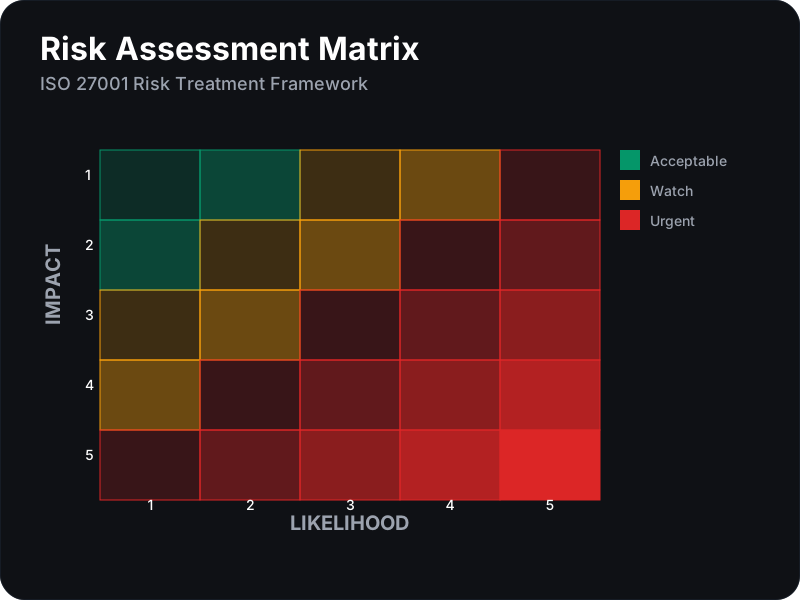
3. Calculate Risk (Impact x Likelihood)
We then score these risks:
- Impact: If it happens, how bad is it? (1 = Minor, 5 = Catastrophic).
- Likelihood: How likely is it to happen? (1 = Rare, 5 = Almost certain).
Risk Score = Impact x Likelihood.
The Risk Treatment Plan (RTP)
Once you have your scores, you have four ways to "treat" a risk:
- Modify (Mitigate): Implement a security control to reduce the risk.
- Avoid: Stop the activity that causes the risk (e.g., stop storing credit card numbers locally).
- Transfer: Move the risk to a third party (e.g., get cyber insurance).
- Accept: If the risk is very low and the cost to fix it is very high, leadership may choose to accept it.
FAQ: Frequently Asked Questions
Do I need to use complex software for risk analysis?
Not necessarily. Many startups use a well-structured Excel spreadsheet. However, as you grow, dedicated GRC (Governance, Risk, and Compliance) tools can make the process more manageable.
How often should we do a risk analysis?
At least once a year, or whenever there are significant changes to your business (e.g., moving from AWS to Azure, or opening a new office).
Who should be involved?
Risk analysis is not just for the IT team. You need input from HR, Legal, and Finance to ensure all business-critical assets are captured.
The Core: Likelihood vs. Impact
The heart of risk assessment is determining the level of risk based on two factors:
- Likelihood: How often could this threat occur?
- Impact: How much damage would it cause to the business?
Conclusion: Turning Fear into Calculated Strategy
Risk management is the heart of ISO 27001. When done correctly, it moves your security conversation from "what-if" nightmares to a prioritized list of actionable steps that protect your bottom line.
Ensure your risk analysis is audit-ready. Our team provides the frameworks and expertise to make asset-based assessment simple.
Get Your Risk Assessment Framework
Disclaimer: Risk assessment results vary significantly by industry and company size. Professional consultation is advised for high-stakes environments.